![[K-Culture] "Ya? No, it's Yo!" 🇰🇷 The Ultimate Guide to Honorifics & Casual Speech in Korea](https://assets.k-learnstay.com/cdn-cgi/image/width=1920,quality=80,format=auto,fit=cover/cms/stories/ya-no-it-s-yo-the-ultimate-guide-to-honorifics-and-casual-speech-in-korea/cover.png)
[K-Culture] "Ya? No, it's Yo!" 🇰🇷 The Ultimate Guide to Honorifics & Casual Speech in Korea
Published:
Hi there, LearnStay family! 🙌
If you’ve watched K-dramas, you’ve probably seen that pivotal moment where a character asks, “Shall we drop the formalities?” (말 놓을까?). Did you notice how the atmosphere shifts instantly? In Korea, the choice between Honorifics (Jondet-mal) and Casual Speech (Ban-mal) is more than just a grammar rule—it’s a social "handshake" that defines the level of respect and intimacy between two people.
For those of you staying with a Korean host family for the first time, don't worry! We’ve put together a super easy and practical guide to help you navigate these linguistic waters like a pro. ✨

1️⃣ The Magic Word: Just remember 'Yo'! 🛡️
If you’ve just arrived in Korea, simply ending your sentences with '~yo' will work 90% of the time. Think of it as your "politeness shield."
- Safe Zone: "Annyeong-hase-yo" (Hello), "Kamsa-hae-yo" (Thank you), "Ma-si-sseo-yo!" (It's delicious!)
- K-Culture Point: Even among the younger generation in Korea, using honorifics when meeting for the first time is considered "cool and respectful." Until you become very close friends, keep the 'Yo' going!
2️⃣ 'Ban-mal' is for when the friendship limit is unlocked! 🔓
Don't be fooled by dramas—shouting "Annyeong!" or "Goma-wo!" to everyone can be risky.
- When to use it: Only use casual speech with people of the same age or younger, OR after the other person explicitly suggests, "Shall we speak casually?"
- Pro-tip: Even if you become very close with your host parents, it is standard etiquette in a Korean household to keep using honorifics with elders. It shows you truly value and respect them as your hosts!

3️⃣ Use 'Titles' instead of 'You' 🏠
In English, "You" is the go-to word, but in Korean, using the direct equivalent of "You" can actually sound a bit aggressive. Instead, mix in these traditional titles to melt your host family’s heart!
- Host Parents: "Eomeoni" (Mother), "Abeonim" (Father) — Always use honorifics with these!
- Older Siblings/Friends: Using "Unnie/Noona" (Older Sister) or "Oppa/Hyung" (Older Brother) while using honorifics is the ultimate "K-Vibe" move. It shows you consider them your real family!
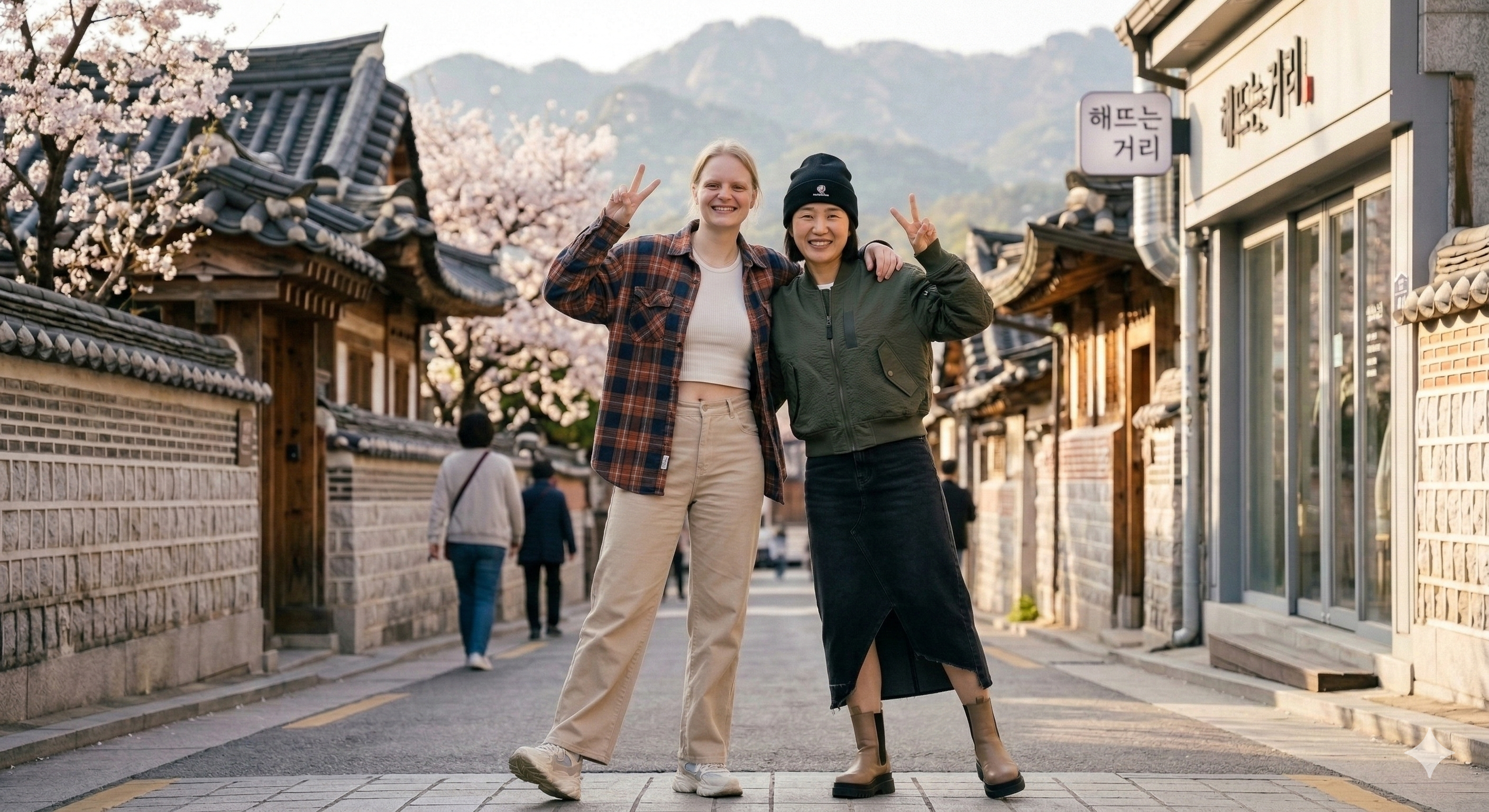
Korean honorifics aren't just cold rules; they are a warm way of showing value to the person you are talking to. With LearnStay, you’ll be a master of Korean "Jeong" (connection) in no time! 💖